Build with confidence
Explore capital, customers and the decisions behind sustainable business growth.
 Explore passes
Mumbai edition · 2027
Ideas worth taking back.
People worth meeting in person.
23 January 2027
8:30 AM–6:00 PM IST
Fairfield by Marriott Mumbai International Airport

 THE SUMMIT EXPERIENCE
ONE DAY. NEW PERSPECTIVES.
A room for the people
moving business forward.
THE MSME BUSINESS SUMMIT
Growth brings decisions. You don’t have to explore them alone.
Join business owners, founders, investors and practitioners in Mumbai. Explore the ideas, relationships and practical questions shaping the next stage of your business.
Explore capital, customers and the decisions behind sustainable business growth.
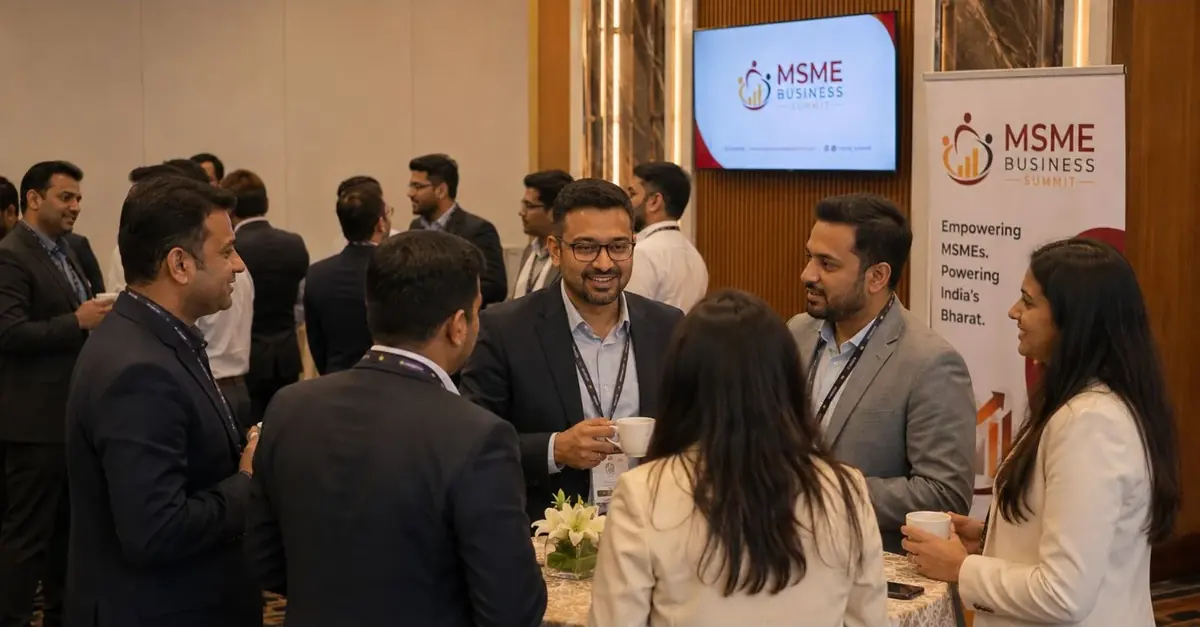
Meet people working through similar challenges, in the room and between sessions.
Join the shared summit programme, MSME conversations and networking.
YOUR DAY, YOUR PASS
Choose your delegate experience.
Prices below include GST.
Explore the programme and build connections. Lunch is not included.
A full day of business insights and connections, with lunch.
Silver ₹1,999 and Gold ₹3,999 include GST, matching the Chennai MSME experience. Continue securely on the official MSME event listing at MojoStartup to book your pass.
Delegate reference prices follow the Chennai MSME experience. Review the destination’s current total and booking policies before paying.
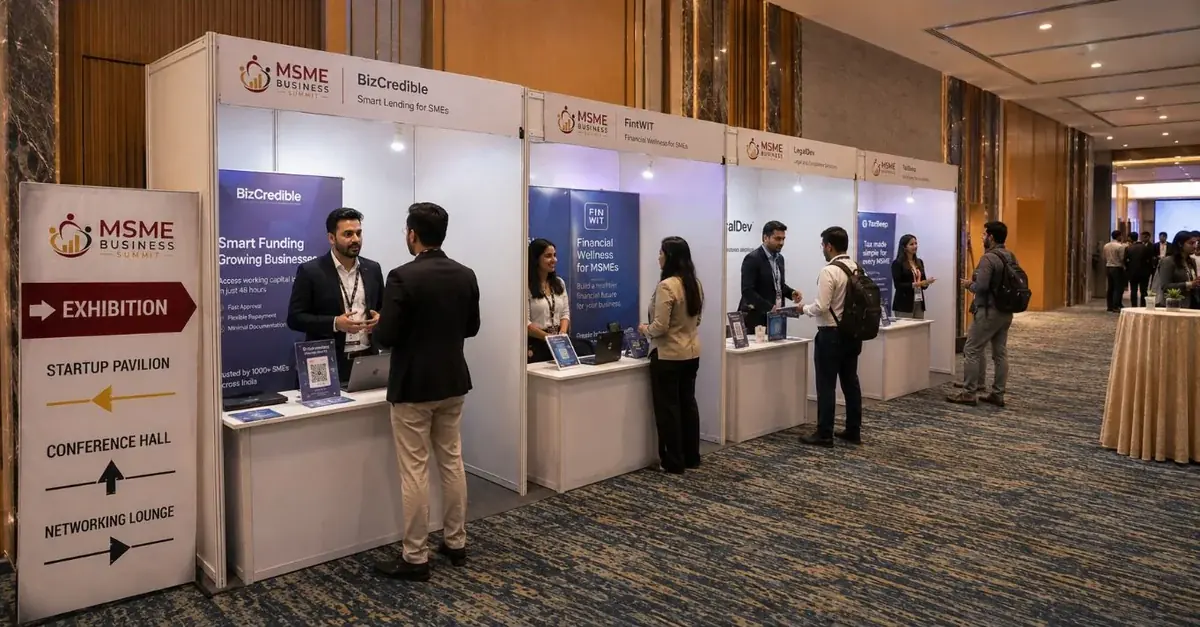
For exhibition, sponsorship or participation questions, contact the organizer.
A DAY WORTH MAKING TIME FOR
Shared Global Startup Summit programme.
All times IST. Programme subject to change.
An investor can see strong sales while a single customer controls renewals, product requirements or market access. The panel will separate booked revenue from a resilient business, test contract and pipeline evidence, and ask when an MSME supplier's exposure to one anchor buyer changes the investment case. Attendees leave with a concentration-risk decision checklist, not a generic funding forecast.
Mumbai founders and family-owned companies often seek capital without surrendering operating control. Investors will discuss how to map group-company dealings, identify which decisions need independent review, and set reporting and consent rules without paralysing the business. The audience gets a practical way to distinguish ordinary group support from a transaction that changes the minority investor's economics; private deal rights remain a discussion, not an asserted fact.
A chain can show profitable units while relying on another company for brand, territory and renewal rights. Investors will separate unit performance from the franchise agreement, challenge the expansion model, and decide what happens if terms change. Mumbai's retail and food-service investors can leave with a rights-and-unit checklist that covers royalty sensitivity, territory concentration and renewal exposure, without presuming any company's private terms.
A Mumbai-region supplier may have capacity but still lack evidence a large buyer can verify. Owners and procurement leaders will prioritise quality records, subcontractor controls, traceability and escalation routes needed before a trial order. They will decide what to build now and what to negotiate with the buyer, producing a focused audit-readiness checklist rather than another broad discussion of MSME growth or delayed invoices.
A digital bestseller can fail when shoppers cannot search for it, packaging cannot explain it, or a store's working capital is tied up in the wrong variant. D2C founders and retailers will decide which SKUs deserve an offline pilot, what proof to gather by neighbourhood and store type, and when to stop. Attendees leave with criteria for shelf productivity, replenishment and customer discovery instead of a generic omnichannel growth story.
Teams can swap an API and still break accuracy, cost, language handling or data rules. Applied AI builders will decide which functions need a fallback, what must be tested before routing traffic, and who can stop a bad substitution. A Mumbai enterprise buyer and startup can use the resulting acceptance criteria during procurement. The discussion distinguishes provider resilience from a simple list of model features.
Demand forecasts can suggest where stock belongs, but D2C brands pay for returns, stockouts and stale inventory when the wrong recommendation is followed. Retail operators and AI teams will debate pilot data quality, override rules and a measurable store-level baseline. The discussion will explicitly split 17½ minutes on retail inventory economics and 17½ minutes on forecast evaluation and human checks, so neither side becomes a decorative label.
A founder's audience can become an editorial bottleneck if no one else can source facts, approve claims or answer questions. Founders will design a small content system with named subject experts, review rights and a handover plan. The panel focuses on continuity and accuracy of the company's voice, not platform reach or conversion attribution. The audience should leave with a workable owner-and-approval map.
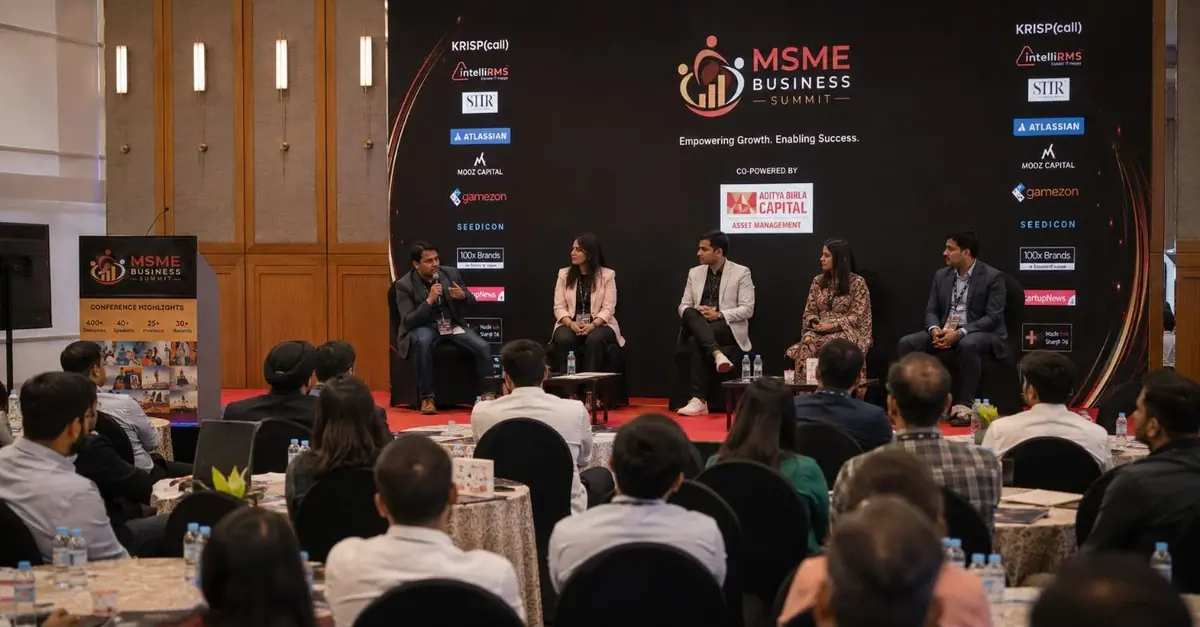
Explore business conversations alongside Global Startup Summit. City speaker announcements will be shared here.
BEYOND THE BUSINESS CARD
The conversations between sessions are part of the day, too.
MEET US IN MUMBAI
A calendar reminder is not a ticket or reservation.
Plot No. 16-B, Samhita Industrial Estate, Andheri–Kurla Road, Mumbai, Maharashtra 400072, India
23 January 2027
8:30 AM–6:00 PM IST
23 January 2027 · Mumbai
Alongside Global Startup Summit